
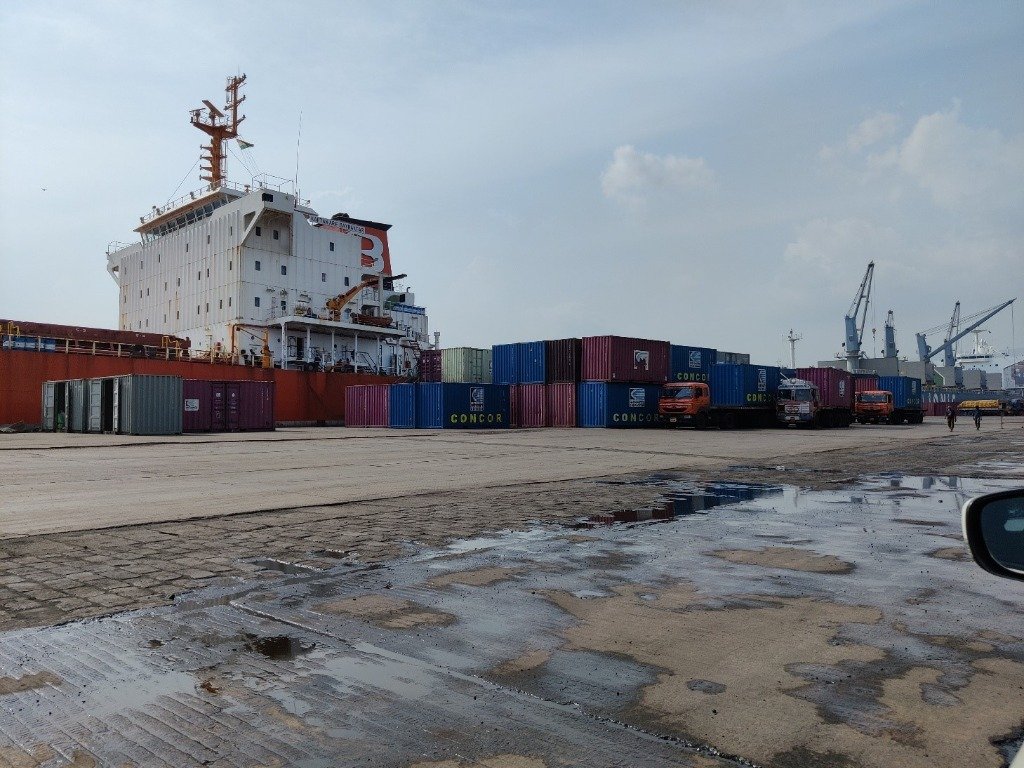
Gujarat has one of India’s strongest maritime economies, with its ports handling a significant share of the country’s maritime cargo. Yet when we talk about making Gujarat’s ports more competitive, the conversation usually focuses on familiar metrics: cargo volumes, turnaround time, connectivity and logistics efficiency. These are essential. But they are not the whole picture. A globally competitive port is also a place that is experienced by workers, businesses, investors and visitors. Its physical environment, supporting infrastructure and overall identity contribute to how the port and its surrounding region are perceived. This is where Gujarat has an opportunity to think differently.
As its ports continue to expand, their influence is no longer contained within the port boundary. Industrial development, logistics facilities, highways, warehouses, housing and settlements increasingly grow around them. The efficiency of the port therefore depends, in part, on what happens outside its gate. A truck waiting in congestion outside the port, an industrial estate poorly connected to the highway, or a settlement struggling with infrastructure can undermine the efficiency of an otherwise well-planned port.
Port planning, therefore, cannot stop at the port gate.
The areas connecting ports to highways, industrial clusters and logistics hubs need to be planned as part of the same regional system. This could include coordinated land-use plans, dedicated freight connections, logistics infrastructure and supporting settlements. There is also a governance challenge. Port authorities may understand the need for development beyond their boundaries, but their jurisdiction is limited. Meanwhile, the surrounding urban local bodies may not have the capacity or resources to plan and manage growth at the scale generated by a major port.
This gap between economic infrastructure and urban governance needs to be addressed.
A stronger model could bring port authorities, urban local bodies, development authorities and infrastructure agencies together through a joint planning mechanism, with a shared master plan for the port's wider influence area, clearly defined responsibilities and coordinated investment. And this is where the idea of Imagebility becomes relevant.
The identity of a port should not be reduced to a logo or a landscaped entrance. It comes from the quality of the entire environment: how efficiently it works, how clearly it is organised, how its infrastructure connects with the surrounding city and industry, and how it is experienced by the people who work there. The future of Gujarat's ports may depend as much on planning beyond the gate as on efficiency within it.