
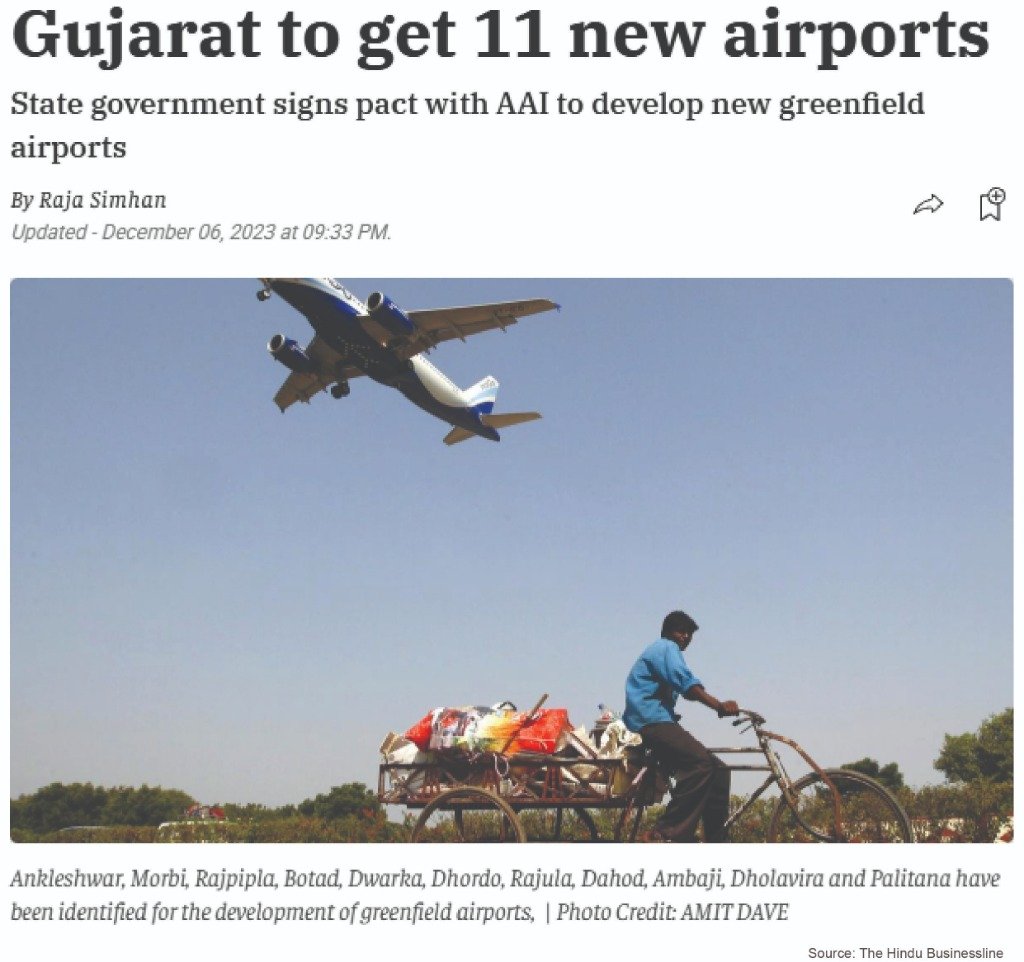
Gujarat is planning 11 greenfield airports across the state, including proposed locations such as Dwarka, Dahod, Dholavira and Morbi. At a national level, a growing number of greenfield airports are also being planned to improve regional connectivity. These are critical infrastructure investments, but their impact can extend well beyond aviation.
An airport does not operate in isolation. It changes the accessibility, land values and development potential of the region around it.
Most greenfield airports are located outside existing city limits, where development is still relatively open and planning frameworks may be limited. Over the next 20–30 years, these locations could attract employment, logistics, tourism, hospitality and other economic activity. The question is: are we planning for this growth before it arrives?
Instead of treating the airport as an isolated infrastructure project, the surrounding area could be planned as a regional growth hub, with a clear land-use framework, infrastructure strategy and development plan for the corridors connecting the airport to the existing city or town. The approach need not be the same everywhere. A tourism-oriented airport such as Dwarka may require a very different development strategy from an airport serving an industrial or logistics region.
But the principle remains the same:
Plan the region around the airport, not just the airport within the region.
Doing this early could help capture land value, guide private investment, coordinate infrastructure and prevent fragmented development around the new airports. Gujarat has a narrow but important window to shape these emerging nodes. The opportunity is not simply to build 11 new airports. It is to decide what kind of growth they will create.